



Standard vs Custom Battery Packs
A standard battery pack is a pre-designed solution built around commonly used voltages, capacities, and features, allowing for faster development and lower engineering cost. A custom battery pack is designed from the ground up to meet specific application requirements, offering higher customization and optimized performance when standard configurations are not sufficient.
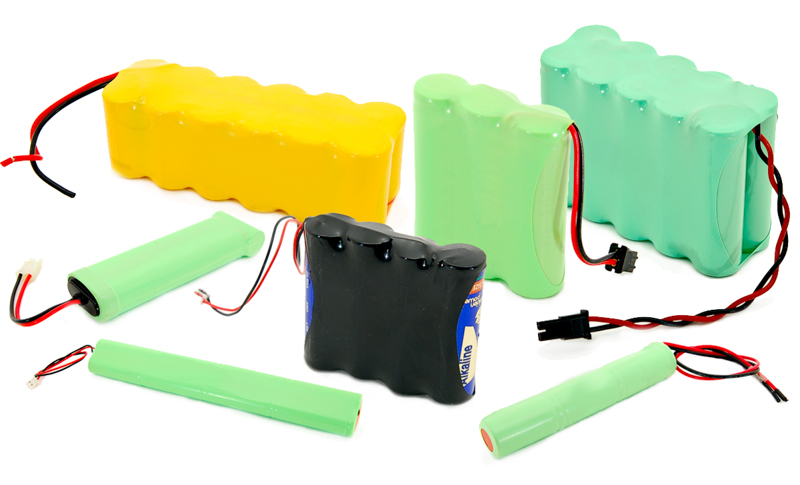
At a Glance:
- Standard battery packs use pre-defined voltages, capacities, and protection features based on common applications, allowing for faster development timelines and lower engineering cost compared to fully custom designs.
- Custom battery packs are engineered from the ground up to meet specific voltage, capacity, size, performance, or integration requirements when standard configurations cannot meet application constraints.
- The right choice depends on application needs: standard packs favor convenience, lead time, and cost efficiency, while custom packs support optimized performance and precise compatibility at higher development effort and cost.
Difference Between a Standard Battery Pack and a Custom Battery Pack
The primary difference between a standard battery pack and a custom battery pack is how each is designed, configured, and applied. Standard battery packs are based on pre-established design attributes intended to meet the needs of a broad range of common applications. Custom battery packs are created to address specific electrical, mechanical, and performance requirements that fall outside standard parameters.
In practice, the choice depends on project needs. Standard packs support convenience, shorter timelines, and cost savings for typical applications, while custom packs are used when precise voltage, capacity, form factor, or integration requirements are critical.
Standard Battery Pack Attributes
A standard battery pack is a pre-designed, readily available solution defined by commonly used attributes such as voltage and capacity, typically measured in milliampere-hours (mAh). These specifications are widely adopted across many applications, allowing Epec to develop battery packs with limited functionality that remain compatible with a broad range of devices.
Although referred to as “standard,” these battery packs are not stocked on shelves. Epec has developed several battery management system (BMS) modules that can be reused across many applications, enabling faster development while still requiring design and assembly effort and associated non-recurring engineering (NRE) costs.
Common Attributes of Standard Battery Packs
The following attributes commonly characterize standard battery packs:
- Fixed voltage ratings intended for typical consumer, industrial, and general-purpose applications.
- Defined capacity values based on common use cases, specified in mAh or Ah depending on pack size.
- Published cycle life expectations, including the number of charge and discharge cycles before capacity drops below 80% of its original value.
- Integrated protection circuitry for overcurrent and overvoltage conditions to enhance safety.
- Designs that can be submitted for key battery certifications, such as DOT UN38.3, UL, and CE, with added time and cost when certification is required.
These attributes make standard battery packs a practical and cost-effective option when application requirements align closely with common design parameters.
Custom Battery Pack
A custom battery pack is designed specifically for a single application, with design decisions driven by unique electrical, mechanical, and performance requirements. This approach allows precise control over voltage, capacity, size, shape, and overall system behavior.
Custom battery packs support a high degree of flexibility, including tailored battery chemistry selection, cell configurations, and management systems optimized for the intended use. While this enables optimized efficiency, lifespan, and power delivery, it also requires more extensive design, engineering, and integration work. As a result, custom battery packs involve higher engineering, testing, and development costs and are typically used in applications with specialized constraints.
Typical Characteristics of Custom Battery Packs
- Design developed from the ground up to meet specific application requirements.
- High degree of customization across electrical, mechanical, and performance characteristics.
- Optimization for efficiency, power delivery, and lifecycle within the target system.
- Greater integration effort, including custom housings, connectors, and management systems.
- Higher development cost compared to standard battery packs.
- Commonly used in applications with unique power requirements or constraints.
Frequently Asked Questions
Quick Links
- What is considered a standard battery pack?
- Are standard battery packs available off the shelf?
- What voltages and capacities are typical for standard battery packs?
- What protections are included in standard battery packs?
- When is a custom battery pack required?
- Why do custom battery packs cost more than standard packs?
What is considered a standard battery pack?
A standard battery pack is a pre-designed solution with commonly used voltages, capacities, and features intended for a wide range of applications. These designs use established attributes to enable faster development and reduced engineering effort.
Are standard battery packs available off the shelf?
No. While they are based on established designs, standard battery packs are still designed and assembled for the customer. Epec uses pre-developed BMS modules to accelerate development, but some NRE costs still apply.
What voltages and capacities are typical for standard battery packs?
Standard battery packs commonly use fixed voltages such as 3.6V, 7.2V, 12V, or 24V. Capacity is typically specified in mAh or Ah, ranging from a few hundred mAh to a few thousand mAh, depending on the application.
What protections are included in standard battery packs?
Standard battery packs typically include protection circuits for overcurrent and overvoltage conditions to improve safety during charging and discharging.
When is a custom battery pack required?
A custom battery pack is used when an application has specialized electrical, mechanical, or performance requirements that cannot be met with standard configurations, such as specific size, shape, or optimized performance needs.
Why do custom battery packs cost more than standard packs?
Custom battery packs require additional engineering, testing, and integration work. This includes developing custom housings, connectors, and management systems, which increases development cost compared to standard designs.
Need Help with a Standard Battery Design?
From early design discussions through production, Epec’s engineering team supports battery pack development to align performance, cost, and timeline with project goals.
Request a Quote Request Design Support Request More InformationRequest a FREE Quote!
We are here to help you will all your custom battery pack needs.
Get Your Quote Now! Not Ready for a Quote? Request more info or email us your inquiry.Ebook - Using Lithium Cells in Custom Battery Packs
 Download Your Copy
...or Download Our Custom Battery Pack Design Guide